18 March
Interior
The Biggest Kitchen Renovation Mistakes (According to Designers)
- Huma Zareef
- 0 Comments
The Biggest Kitchen Renovation Mistakes (According to Designers)
A kitchen renovation can add huge value to a home and completely change how the space feels to live in.
But it is also one of the easiest places to make expensive mistakes.
That is because kitchens are not just decorative spaces. They need to work hard every day. And when the layout, storage, lighting, or planning is wrong, the problems show up fast.
UK renovation and design advice aimed at homeowners consistently points to the same pattern: most kitchen regrets come from decisions made too quickly or in the wrong order.
Here are the biggest kitchen renovation mistakes designers keep seeing and what to do instead.
1. Starting with style before sorting the layout
This is one of the most common mistakes in kitchen renovations.
People often focus on cabinet colours, worktops, splashbacks, and taps before planning how the kitchen will function. Poor layout is one of the main reasons kitchens feel awkward to use.
A good kitchen layout should consider:
- Where you prep food
- Where you cook
- Where you wash up
- Where you store everyday items
- How people move through the room
If those basics are wrong, no finish will save the space.
2. Trying to cram too much into the room
Many homeowners try to include everything: an island, tall cabinets, seating, extra appliances, and more storage.
This often leads to:
- Narrow walkways
- Appliance doors clashing
- Awkward movement
- A cramped feeling space
Sometimes, the smartest kitchen is the one with less in it.
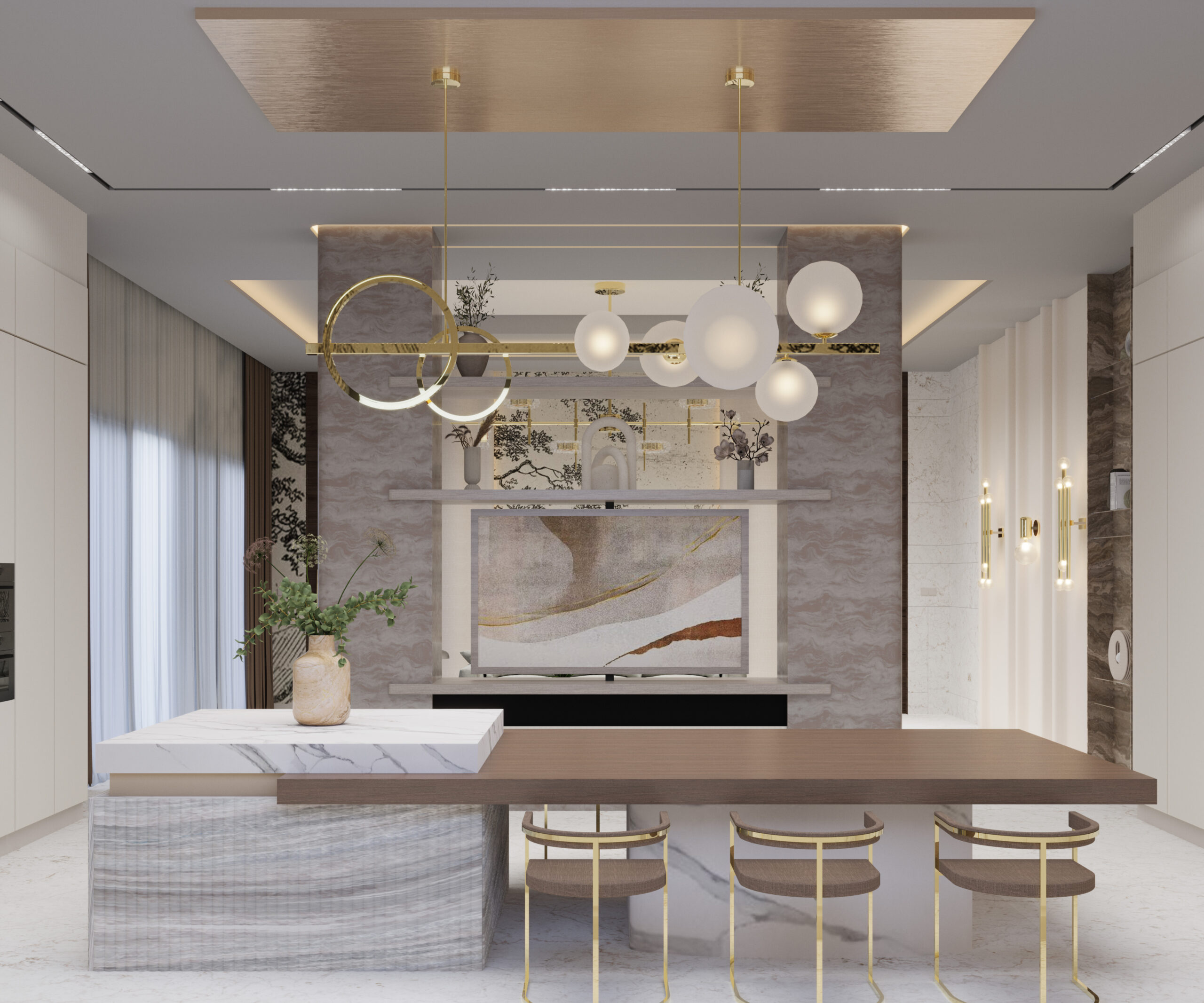
3. Forcing in an island that does not fit
Kitchen islands are popular, but they often fail due to poor sizing or positioning.
A badly planned island can:
- Block circulation
- Make the kitchen feel cramped
- Clash with appliance doors
- Reduce usable workspace
If space is limited, consider a peninsula or extended worktop instead.
4. Not leaving enough circulation space
Many kitchens look fine on a plan but fail in real life due to poor movement space.
This becomes clear when:
- The dishwasher is open
- Someone walks past
- Chairs are pulled out
- Multiple people use the kitchen
Comfortable movement is essential for daily use.
5. Ignoring storage or planning the wrong storage
Storage is not just about quantity, but usability.
Poor storage leads to:
- Cluttered worktops
- Overfilled cabinets
- Dead corners
- No space for appliances or pantry items
Plan storage around real-life needs, not ideal scenarios.
6. Leaving lighting too late
Lighting is often overlooked until the final stages.
A well-designed kitchen needs:
- Task lighting for prep areas
- Feature lighting where appropriate
- Ambient lighting for overall balance
Lighting should be planned alongside the layout, not after.
7. Forgetting sockets and service positions
This small detail can cause major frustration later.
Poor planning affects:
- Kettles and toasters
- Coffee machines
- Phone charging
- Under-cabinet lighting
- Future appliances
Fixing these later is difficult, so plan early.
8. Designing around looks instead of workflow
Kitchens should be designed for use, not just appearance.
A good workflow connects storing, prepping, cooking, and cleaning efficiently. Poor positioning makes everyday tasks harder.
9. Choosing impractical trends
Some trends look great but are difficult to maintain.
Always ask: Will this still work well in daily use?
10. Not considering the whole house layout
A kitchen should connect naturally with surrounding spaces.
Consider:
- Entry points
- Traffic flow
- Connection to dining/living areas
- Outdoor access
- Clutter zones
Good space planning ensures better integration.
11. Rushing decisions without testing the plan
A layout may look good but fail in real life.
Test your design:
- Can two people cook together?
- Can appliances open freely?
- Can people move easily?
- Does it work during busy times?
Practical testing prevents costly mistakes.
How to avoid these mistakes
- Finalise the layout first
- Allow realistic circulation space
- Plan storage based on real needs
- Check island sizing carefully
- Review service positions
- Plan lighting early
- Test the design practically
Final thoughts
The biggest kitchen renovation mistakes are rarely dramatic. They are daily frustrations caused by poor planning.
A well-designed kitchen should not just look good — it should feel easy to use.
Need help planning your kitchen renovation?
If you are at the early stage of your renovation and want to avoid costly mistakes, a layout consultation can help you make confident decisions before work begins.Book your consultation:https://humazareef.co.uk/about-us
Related Posts

- Huma Zareef
- February 20, 2026
Open Plan Layout: What Works (And What Doesn’t) in a UK Home
Open Plan Layout: What Works (And What Doesn’t) Open plan living is one of the most requested ..
- Huma Zareef
- March 20, 2026
Do You Need an Interior Designer for a Home Renovation?
Do You Need an Interior Designer for a Home Renovation? If you’re planning a home renovat ..